
Why has the NHS stopped ear wax removal — and what to do instead
- asarichards
- Jun 1
- 3 min read
Updated: Jun 2
IMany patients are now asking why has the NHS stopped ear wax removal — and if you've recently been told by your GP surgery that they no longer offer it, you're not alone and you're not imagining things. Since 2020, the NHS reclassified ear wax removal as an "enhanced service" rather than a core GP service. That single administrative change meant that most GP practices across England and Wales stopped offering it overnight, because they simply aren't funded to do it anymore. The result? Millions of people left with blocked ears, reduced hearing, and nowhere obvious to turn.
Why has the NHS stopped ear wax removal?
For decades, if your ears were blocked, you'd pop into your GP surgery and a practice nurse would syringe them. Job done, free of charge. But ear syringing carries risks — eardrum damage, infection, dizziness — and newer, safer methods like microsuction have become the clinical gold standard. The problem is that microsuction requires specialist equipment and trained clinicians, which most GP surgeries simply don't have. Combined with funding pressures on the NHS, the decision was made to remove ear wax removal from the standard GP contract. The Royal National Institute for Deaf People (RNID) estimates that around 8 to 10 million people in England currently lack access to NHS ear wax removal. That's not a small number.
What are your options in Chepstow and Monmouthshire?
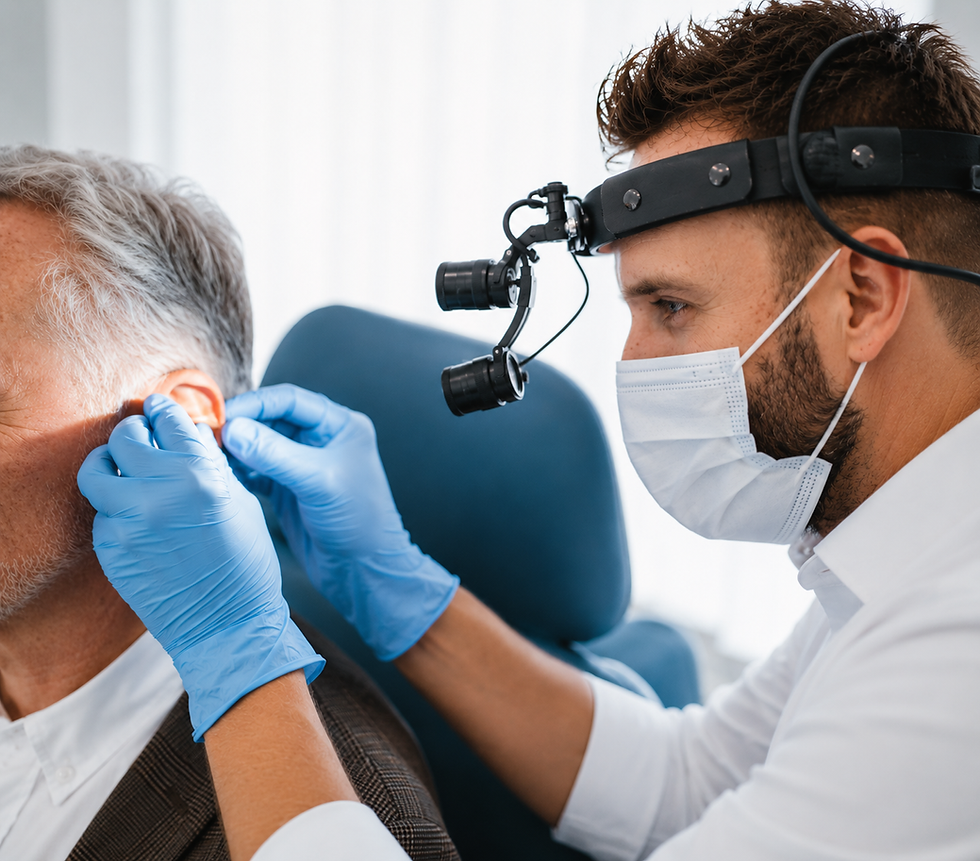
The good news is that professional ear wax removal is still very much available — it just requires booking with a private clinic. Here in Chepstow, we offer microsuction and irrigation carried out by qualified audiologists, usually with same-day or next-day appointments available. Microsuction is the method recommended by current NICE guidelines. A clinician uses a fine, low-pressure suction device under direct vision to remove wax precisely and comfortably — no water, no flushing, no guessing. We also offer gentle warm water irrigation where appropriate, which many patients find just as comfortable.
What should you do to prepare?
Whether you come to us or go elsewhere, try to use olive oil drops (or an olive oil spray like Earol) for three to five days before your appointment. Softening the wax beforehand makes the removal quicker, more comfortable, and more effective. Just tilt your head, apply a few drops to the affected ear, and keep your head tilted for a minute or so. Do this morning and evening in the days leading up to your appointment.
Is private ear wax removal expensive?
At the Chepstow Hearing Clinic, ear wax removal is up to £65. For most patients, the appointment takes around 20 to 30 minutes and the results are immediate — your hearing restored, the pressure gone, the muffled feeling cleared. When you consider that many people struggle with blocked ears for weeks or even months waiting for an NHS referral that may never come, most of our patients tell us it was absolutely worth it.
A word on unregistered providers
Ear wax removal is not a regulated industry in the UK — meaning anyone can legally offer it without formal qualifications. When booking, always check that your clinician is a qualified audiologist, nurse, or registered healthcare professional. At the Chepstow Hearing Clinic, all ear wax removal is carried out by trained clinicians operating to current NICE guidelines. If you're struggling with blocked ears, reduced hearing, or persistent discomfort, give us a call on 01291 332211 or book online. Most appointments are available within a day or two, and you'll leave feeling the difference immediately.


Comments